
Before I went to law school, I saw medical malpractice occurring unchecked in the ER where I was a critical care nurse. I know the strains of that job, the understaffing problems, and how that job has changed in the 30 years since I worked in it full time. I felt powerless to help patients who suffered, and who often didn’t know enough about their condition and how hospitals and healthcare work to know they had been the victims of a negligent healthcare provider. Sometimes that negligence is what had brought them into the ER in the first place, especially if that person was elderly. However, I saw many of instances of patients who needlessly suffered and struggled with the medical consequences of someone else’s negligence.

If you’re curious about this area of law and if it may have happened to you, I’ve outlined 11 common types of medical malpractice cases here.
In case you haven’t encountered much about this topic yet, there are 4 requirements that have to be proven in a medical malpractice case.
- The healthcare professional was providing and/or responsible for the care to the patient (duty of care)
- The medical professional was negligent (breach of the duty of care)
- The medical professional’s negligence caused the injury to the patient
- The patient suffered actual injuries as a result of the negligence
Medical malpractice can occur at a doctor’s office, in a hospital, in a clinic, in a nursing home, or in a lab. You may never see the person whose negligence harmed you, or they may be the warm and gentle doctor you’ve trusted for years. Or you may have been harmed not because of the actions of any one person, or their failure to take action, but because the policies at the facility where you are being cared for are negligent or promote negligence. Institutional negligence can result from understaffing, inadequate training, faulty machinery, a lack of oversight, or inadequate safety rules. If there are only two nurses in your floor, and both are helping a patient having a heart attack, they can’t help you when you are struggling to breathe and buzzing the nurses’ station for help. In this type of scenario, the nurses weren’t negligent, but the hospital was negligent by only scheduling two nurses for the floor and providing no way for them to call for additional help.
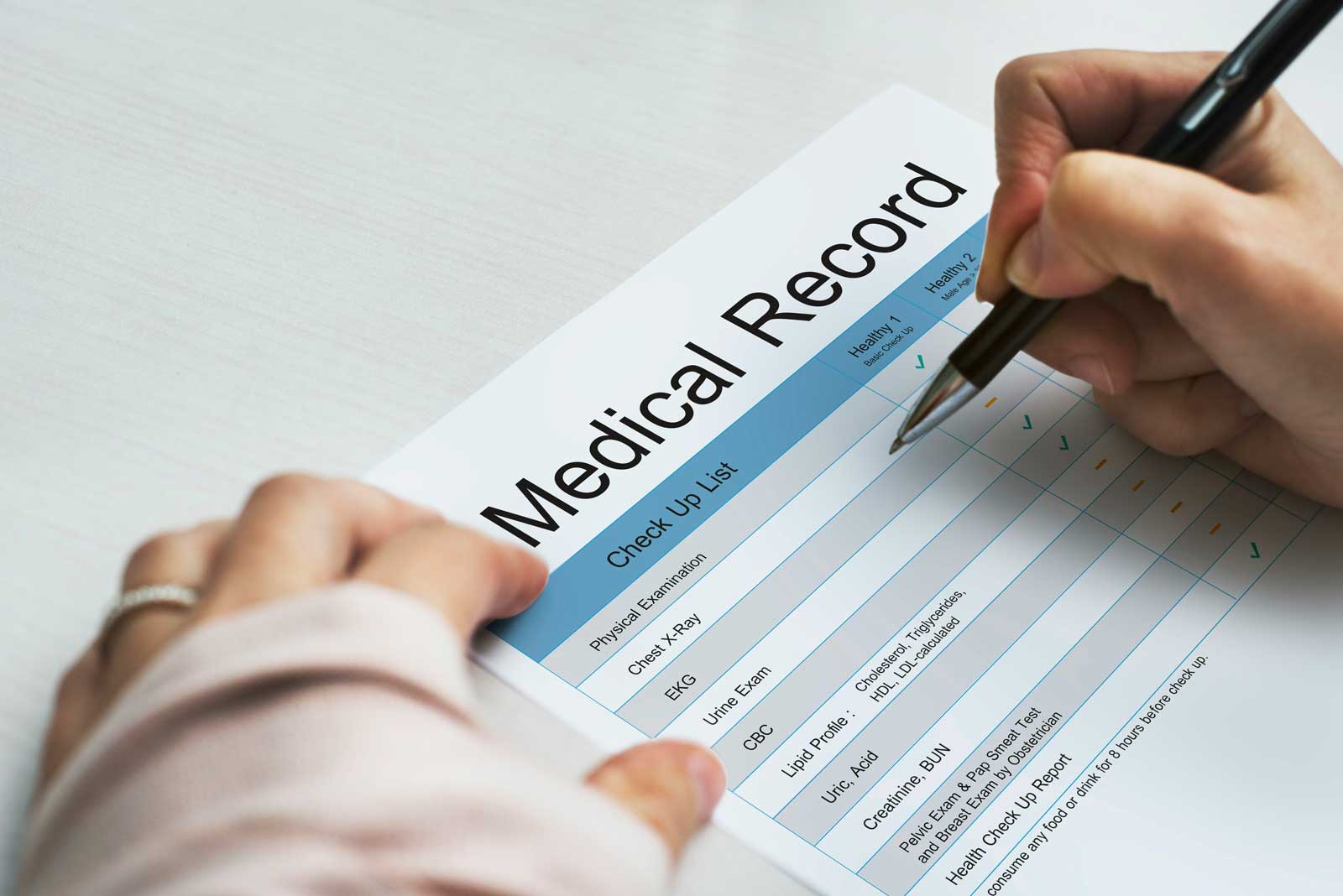
One of the big things I emphasize with all my clients and potential clients is to document everything. Your case depends on what we can prove, and we have to have documentation to do that. Your medical records are a significant part of that.
Your medical records are important in all 4 requirements.
- Your medical records detail who was caring for you, who entered your room, where your lab or imaging results were sent, and at what times. These can be cross-referenced with lab, clinic, or hospital schedules to prove who was on duty or who was assigned to you. This person had a responsibility to care for you.
- Medical records tell us what medications were and weren’t given, what treatments were and weren’t prescribed, and at what times. We know from medical records who visited your room and what they reported about that visit. For example, did you complain of pain or swelling to your doctor? Were you asleep when the nurse changed your bandages? Did the nurse page your doctor at 2pm but they didn’t access your medical records or respond until the next morning? From this information we can piece together what actions or inactions led to the negative outcome you experienced.
- This is a tough one to prove. We have to directly show that the negligence of the healthcare professional who was responsible for your care resulted in your suffering an injury. Maybe the doctor was negligent in not responding to the page. Maybe they ignored or didn’t read the note from the nurse who reported signs of an infection at your surgery site. But we have to prove that that the doctor’s delay in action (prescribing antibiotics) resulted in your need for an emergency second surgery.
- This is where we discuss damages. Pain and suffering are types of damages you can sue for in Georgia, but it’s almost impossible to prove they exist without an actual injury to explain them. If you had to have a second surgery because of someone’s negligence during the first or during your recovery, that’s in your medical records. If you reasonably could have had to have the second surgery even if no one caring for you was negligent, then that’s not medical malpractice. But if we can prove that another patient in your same condition wouldn’t have needed a second surgery if they’d had a doctor who responded to signs of infection promptly, that is proven malpractice. I also want to say, loud and clear, that bedsores are always an indication of negligence. You can’t always build a case on that alone, but it is a provable injury that would not have occurred if caregivers were following the proper standard of care, which is present in both hospitals and home health care like hospice services. Pay special attention if you or your loved one developed bedsores in addition to other injuries and negative medical outcomes.
While I always encourage people to write down what happens to them in medical situations with as much detail as possible—who they talked to and at what time, what their symptoms are, what medications they are taking, etc.—your medical records are even more important because the courts consider them to be unbiased. They’re the step-by-step account of what occurred to you medically: what was prescribed and when, who prescribed it, who visited you, who your surgeon was, what tests they ordered, and who carried out those orders. Your medical records include imaging like x-rays and CT scans, as well as lab results like for bloodwork, urine samples, and biopsies. They establish a timeline, and indicate whether the standard of care was followed or not.
Despite how it seems, your doctors, nurses, and techs can be biased, and they are the ones who create and maintain your medical records. But don’t worry. My experience as a critical care nurse and as a medical malpractice attorney means I’m very good at spotting gaps and evidence of tampering in your records. I know how you should have been treated for your condition (the standard of care), so I can spot when orders were given a day later than they should have been, when you were given far more or less medication than was safe or warranted in your situation, when you were given the wrong medication. Having once been a hospital nurse myself, I’m especially good at noticed when a nurse was suspiciously careful in how they worded their notes, seeing right to what they were either trying to hint at or cover up.
If you suspect you experienced medical malpractice in the last two years, please call my office as soon as possible to set up a free consultation. I want to hear your story and help you understand what happened to you and what it may mean for your future health. From there, I can advise you if you have a legal case. Be sure to bring as much documentation, like your medical records, as possible.
Obtaining Your Medical Records
You can always request copies of your medical records from any lab, clinic, doctor’s office, or hospital. These are your records and nothing in them should be a secret from you, with very few exceptions. However, like lots of things in healthcare, the process to obtain them can be a bit complicated. Follow the steps below to obtain your records.
- Know Your Rights (HIPAA gives patients in the US the right to access and obtain copies of their medical records)
- Identify the Correct Provider and Department (where are the records stored and how do you contact the department that has them)
- Submit a Written Request (fill out the proper forms or submit a written request in letter form, including the following information)
- Your full legal name and any previous ones that might be in your records
- Date of birth
- Identifying numbers (patient or case number, social security number)
- Contact information (address, phone number, email address)
- Specific information and records you are requesting (include dates and types of records)
- Specify Your Delivery Preference (paper, email, CD; pick up or mail)
- Pay Any Required Fees (or ask if fees can be waived or reduced because of hardship, always ask for a receipt)
- Wait for a Response (HIPAA allows providers up to 30 days to respond to information requests, be prepared to wait longer if records are being mailed)
- Review the Records (make sure they are accurate and complete)
If you have followed the steps above are getting the run around, be polite but persistent. If you’ve received your records but parts are missing or inaccurate, contact your provider again and ask to talk to the highest-ranking person available. Explain the problem with the records and firmly explain that you expect the department to correct this error quickly. Refuse to pay an additional fee, as the provider has not yet given you what you paid for the first time. Write down when you called and the names of the people you spoke to. If you are still having trouble, call my office. A letter from me should clarify for them that you know your rights and are not going to take “no” for an answer about your health.
Are You Ready to Work with Dellacona Law?
Client Testimonial
We feel she made our future brighter despite what had happened. We cannot thank Tracey enough for representing us during this life changing ordeal. WE would highly recommend her to anyone. She and her staff are not just our lawyers, but they are our friends.
– Janice C.

Related Articles




Are you ready to work with Dellacona Law?
